

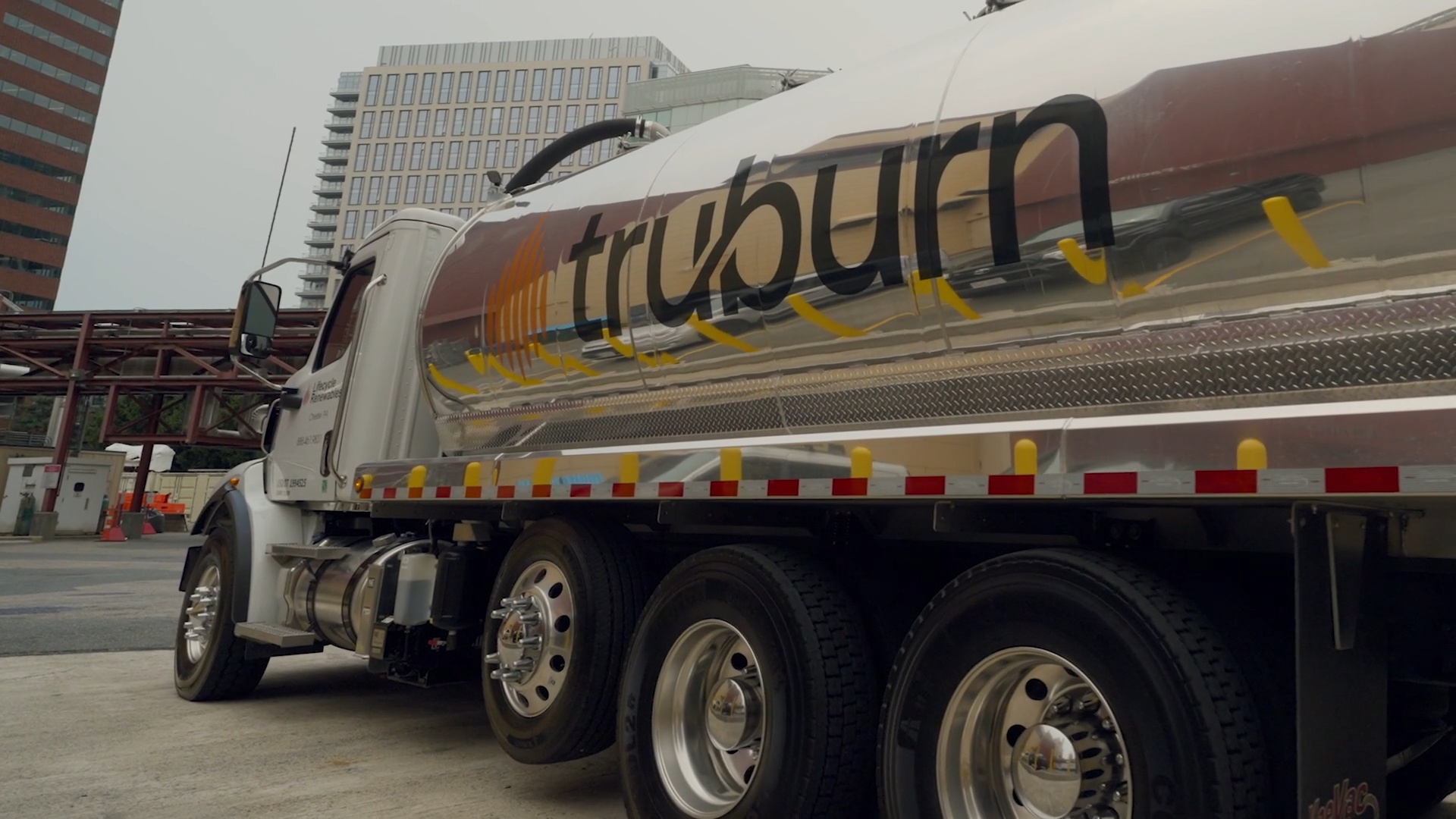
Cities usually solve one problem at a time: a sewer program for grease, a climate plan for buildings, a reliability plan for hospitals. In Boston and Philadelphia, Truburn® and Vicinity Energy run one system that works on all three at once.
Cities pay for the same waste twice
Every commercial kitchen produces used cooking oil. When it goes down the drain, it hardens in the pipes. The Philadelphia Water Department warns that grease builds up into blockages and “fatbergs” in the sewer system. Boston Water and Sewer Commission officials describe grease as a recurring cause of “costly public and private sanitary sewer overflows.”
Meanwhile, the same cities heat hospitals, labs and office towers with fossil fuel, and those buildings sit at the center of every municipal climate plan.
One stream is a disposal problem. The other is an emissions problem. They are usually handled by different agencies, different budgets and different contractors. They don’t have to be.
Infrastructure hiding in plain sight
Most people picture renewable infrastructure as solar panels and wind turbines. The system in this film looks different, but it is just as physical. Containers behind restaurants and a route network that empties them on a schedule. Facilities that clean and convert the oil into Truburn®, a 100% renewable heating oil. Tanks and a truck fleet that move finished fuel to where heat is needed. And Vicinity’s district energy plants, with the steam lines under the streets that carry heat to the buildings they serve.
None of it required new pipes under city streets or a new power plant. It connects assets that already existed: kitchens, trucks, tanks, boilers and steam lines.
Several problems, one loop
| The city problem | What the loop does |
|---|---|
| Grease in the sewers | A scheduled, collected outlet for restaurant cooking oil |
| Emissions from building heat | A renewable fuel made from waste replaces fossil fuel oil |
| Reliable heat for critical buildings | Fuel stored on site and delivered regardless of weather |
| Local economic value | A local resource kept in productive local use, supporting local jobs |
That is the point of infrastructure: one investment, several public benefits.
Firm, storable renewable heat
Reliability is where this system earns the word infrastructure. Sunshine and wind come and go. Used cooking oil arrives every day, kitchens need it removed, and once it becomes Truburn® it can sit in a tank until a cold night calls for it.
That matters for what Vicinity’s steam does. In Boston and Cambridge it reaches medical centers, where it runs the autoclaves that sterilize surgical instruments. For buildings like that, the heat must always stay on. A renewable fuel that cannot be stored and dispatched on demand does not belong in that job. Truburn® is a drop-in replacement for conventional heating oil, so it fits plants that are already built for that duty.
Proof at city scale
This is not a pilot. Vicinity announced its supply agreement with Lifecycle Renewables in April 2021, starting in Philadelphia, with Boston next. At announcement, Vicinity sized the program at 600,000 gallons of food service waste oil a year and cited a greenhouse gas reduction of more than 80% compared with distillate fuel.
What this means for New York
New York has the same two problems at larger scale. The city’s restaurants produce used cooking oil every day, and the Department of Environmental Protection requires food businesses to keep grease out of the sewers. Its buildings face tightening Local Law 97 emissions caps. We made that case in The Best Use of New York’s Used Cooking Oil Is Heating New York.
We don’t have to choose between environmental responsibility and reliable energy. We can have both.
Come See Truburn® Live: Schedule Your Tour
Want to see Truburn® in action? We invite NYC building owners and managers to tour an active Truburn®-powered building in Manhattan and see firsthand how easy the transition is.
Get in touch with Lifecycle Renewables:
- 📞 Call us: 888-461-9831
- 📧 Email: truburn@lifecyclerenewables.com
- 🌐 Website: truburnfuel.com
Sources & References
1. Philadelphia Water Department, “Grease Is For Poles, Not Drains,” February 10, 2023. water.phila.gov
2. Dorchester Reporter, “Officials: Don’t clog drains with holiday goop,” November 15, 2018 (Boston Water and Sewer Commission). dotnews.com
3. Vicinity Energy, “Vicinity Energy Implements Renewable Biogenic Heating Oil, Transforming Food Waste into Energy and Creating Jobs,” April 13, 2021. vicinityenergy.us
4. NYC Department of Environmental Protection, “Disposing of Grease as a Business.” nyc.gov
5. Vicinity Energy and Lifecycle Renewables, “Powering possibility. Together.” Video, 2026.
