

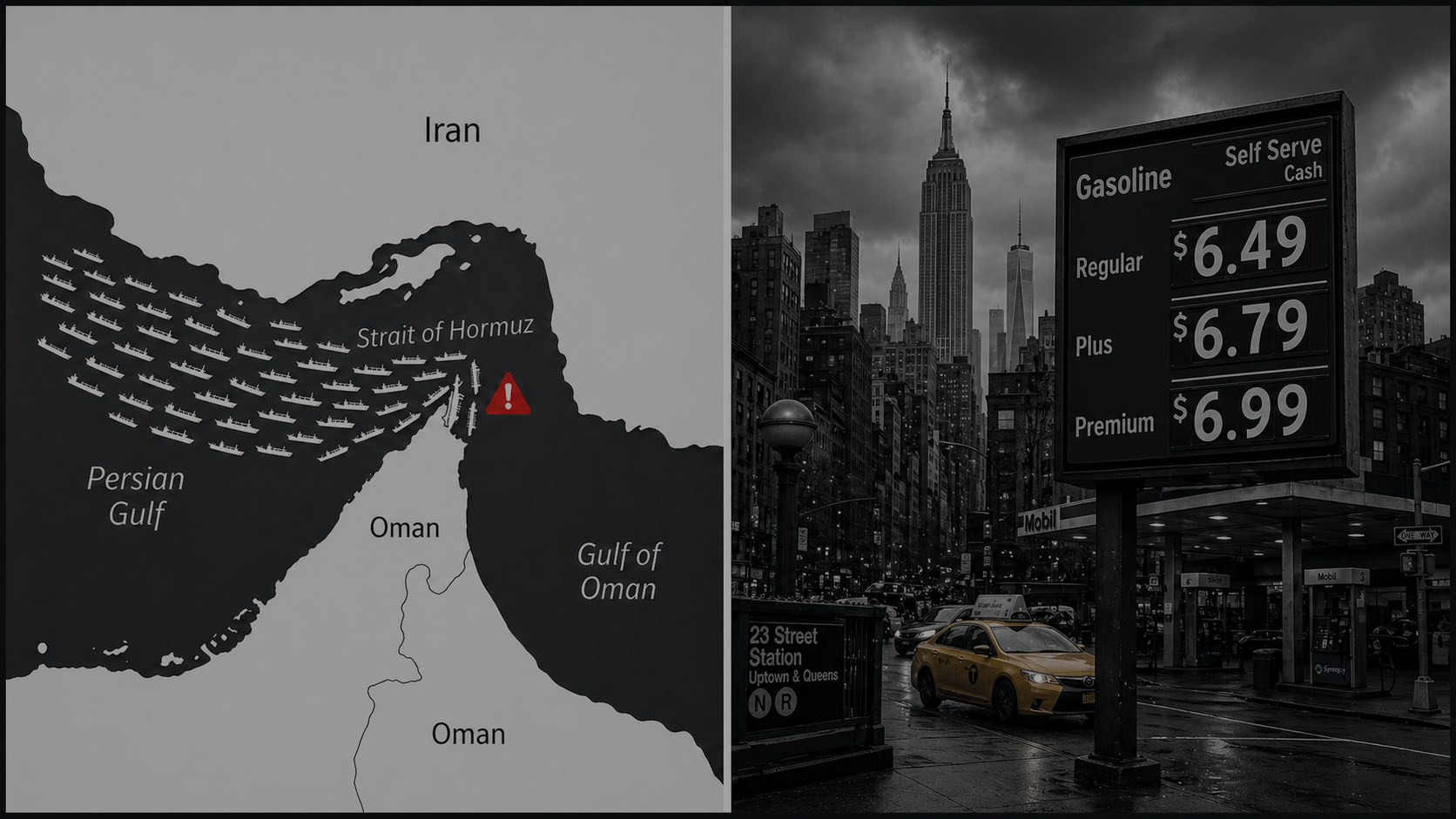
The Iran-driven energy crisis is a sharp reminder: NYC building owners need cost-stable, locally sourced fuels like Truburn® so heating budgets aren’t dictated by far-off geopolitical shocks.
A Global Crisis, a Local Bill
The conflict involving Iran has disrupted shipments through the Strait of Hormuz, a chokepoint that carries a large share of the world’s oil and gas. Tankers are delayed or rerouted, Brent crude spikes, and delivered heating oil and diesel in New York climb with it.
For NYC co-ops, condos, and commercial owners, war headlines turn straight into surprise fuel surcharges and blown operating budgets — a regional conflict thousands of miles away deciding whether a building heats or defers essential maintenance.
Sustainability Is Now Cost Resilience
“Sustainability” is usually framed around emissions. For building owners, it also means economic resilience — keeping essential services affordable when global markets swing. A truly sustainable fuel strategy protects residents and tenants from extreme price spikes, not just one that reduces carbon on paper.
A single chokepoint in the Gulf shouldn’t decide what it costs to heat an Upper West Side apartment building or a Bronx nonprofit facility.
Buyers Are Moving Away From Oil Dependence
Major energy users are already cutting reliance on conventional oil because repeated price spikes blow up budgets. Sustained high fossil prices are forcing utilities, industries, and governments to diversify their mix, and sectors that expanded alternatives after previous crises are seeing fewer disruptions and less price pressure in this shock.
The pattern is clear: those locked into conventional oil keep paying for every crisis; those who diversify into non-Gulf-linked fuels gain more predictable operating costs.
Why Truburn® Is More Cost-Stable
Truburn® is a renewable heating oil supplied through regional feedstocks and local logistics — not crude from the Gulf. Because its supply chain is rooted closer to New York, Truburn® is less exposed to disruptions in Hormuz and other global chokepoints that drive up world oil prices.
The practical advantage today is budget stability: owners can plan annual fuel spend and long-term operating projections against a source that isn’t priced solely off the same volatile global barrels driving today’s spike.
Truburn® vs. Other Fuel Choices
For owners considering a change in response to price volatility, here’s where Truburn® sits relative to other fuels available in NYC:
| Fuel type | LL97-counted emissions reduction vs. fossil oil | Commercial availability in NYC | Typical implementation needs |
|---|---|---|---|
| Truburn® | 74% reduction | Widely available as a delivered heating fuel | Drop-in for existing oil-ready systems |
| Biodiesel blends | 52% reduction | Available with blend limits | Often compatible; may need minor adjustments |
| Cellulosic diesel | 57% reduction | Not commercially available | Not currently practical for buildings |
| Renewable diesel | 46% reduction | Limited availability | Supply and compatibility checks required |
| Biogas | 71% reduction | Not broadly available for buildings | Needs specialized gas infrastructure |
| Natural gas | 28% reduction | Widespread pipeline availability | Requires gas service and combustion systems |
Truburn® functions as a drop-in liquid fuel for buildings already set up for oil — sourcing energy from outside the most volatile parts of the global oil system. Owners can de-risk their fuel spend without the time, permitting, and capital cost of major equipment conversions.
Cost Control and LL97 Compliance — in One Move
Truburn® has also been evaluated by New York City and shown to deliver a 93% lifecycle emissions reduction versus fossil heating oil, with 74% counted under LL97 — outperforming every other recognized, commercially available fuel. A single fuel decision can both reduce exposure to Iran-driven price spikes and lower the risk of LL97 fines, stabilizing fuel budgets today while staying ahead of a tightening regulatory cost curve tomorrow.
Come See Truburn® Live — Schedule Your Tour
Want to see Truburn® in action? We invite NYC building owners and managers to tour an active Truburn®-powered building in Manhattan and see firsthand how easy the transition is.
Get in touch with Lifecycle Renewables:
- 📞 Call us: 888-461-9831
- 📧 Email: truburn@lifecyclerenewables.com
- 🌐 Website: truburnfuel.com
Sources & References
- CNBC, “Iran War, Renewables, and the Strait of Hormuz,” March 2026. cnbc.com
- Wikipedia, “2026 Iran War Fuel Crisis.” en.wikipedia.org
- Brookings, “The Iran Conflict’s Energy Shocks Are Not Yet Fully Realized.” brookings.edu
- NYC Mayor’s Office of Climate & Environmental Justice, “PowerUp Research and Findings — Building Electrification.” nyc.gov
- NYC Department of Buildings, “Local Law 97 — Greenhouse Gas Emissions Reductions.” nyc.gov
- Carnegie Endowment, “Iran War, Energy Crisis, Fuel Oil — Renewable Outlook.” carnegieendowment.org
- The New York Times, “Iran, Energy, and Climate,” April 2026. nytimes.com
- Truburn® by Lifecycle Renewables, “Truburn Cuts Carbon Emissions by 93% — A Game-Changer for NYC.” truburnfuel.com
- Truburn® by Lifecycle Renewables, “Laws and Legislation.” truburnfuel.com
- The Cotocon Group, “Gas vs. Electric Buildings in NYC.” thecotocongroup.com
- UrbanStrong, “How to Upgrade Your NYC Building to Be Energy-Efficient and Profitable.” urbanstrong.com
